Skip to content


Ensuring your pallet wrapping machine meets expectations before shipment can avoid costly delays and operational inefficiencies. A Factory Acceptance Test (FAT) is the key step to verify that the equipment performs reliably under your conditions. By testing actual or equivalent load cycles and safety functions, buyers can make informed shipment approvals.
A pallet wrapping machine FAT should verify performance through defined pass/fail criteria. Test actual or equivalent load wrapping across cycle repetitions and separately observe safety features like the emergency-stop functions. Record results for traceability and make remote FAT auditable by requesting continuous footage and supporting documentation.
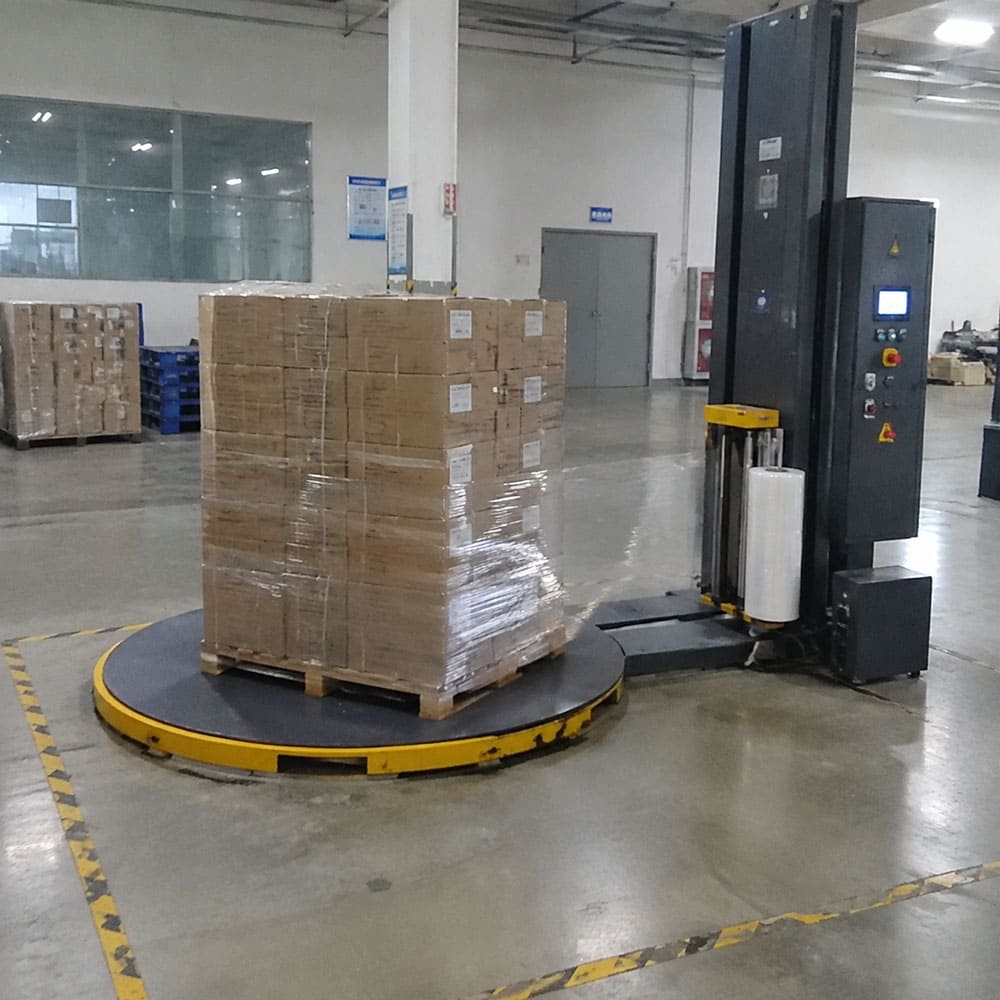
Before we explore each step of the checklist, let’s define why testing is critical and how detailed results reduce the risk of operational problems after arrival.
Why is a Factory Acceptance Test (FAT) crucial for pallet wrapping machines?
Shipping unchecked equipment can lead to faulty operation, safety failures, or incompatibility with load requirements.1 Without a structured FAT, buyers risk discovering problems too late.
A FAT mitigates risks by exposing intermittent issues.2 It verifies load-handling capacities, stable operation over repeated wrapping cycles, and critical safety features under predictable triggering conditions.
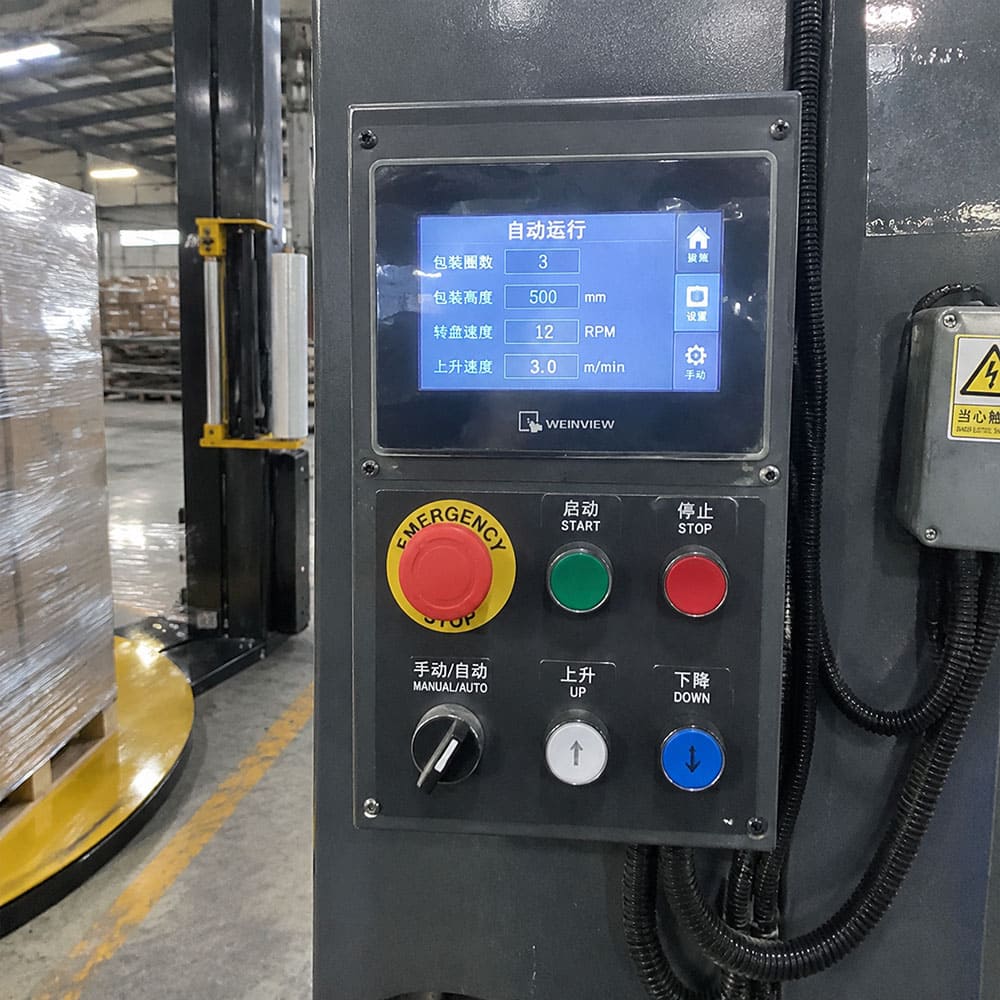
To make a FAT actionable, testing should follow predefined pass/fail criteria tailored to the machine’s task. Once verified, clear approval signatures allow shipment with confidence.
What should you define before the FAT begins?
Unclear or mismatched test conditions are a common pitfall during FAT. Buyers must define load weights, dimensions, stability, wrapping requirements, and whether genuine or equivalent pallets will be tested.
Start by clearly specifying the following:
- Pallet dimensions: Height, width, and weight requirements.
- Load characteristics: Stability type (stacked boxes, barrels, fragile items, etc.).
- Wrapping pattern: Stretch film coverage style — full coverage, partial wrap, top-sheet application, etc.
- Cycle count: How many pallet wraps the machine should perform consecutively during the FAT.
- Test pallet: Whether test loads will be actual shipping pallets or similar equivalents documented for the FAT.
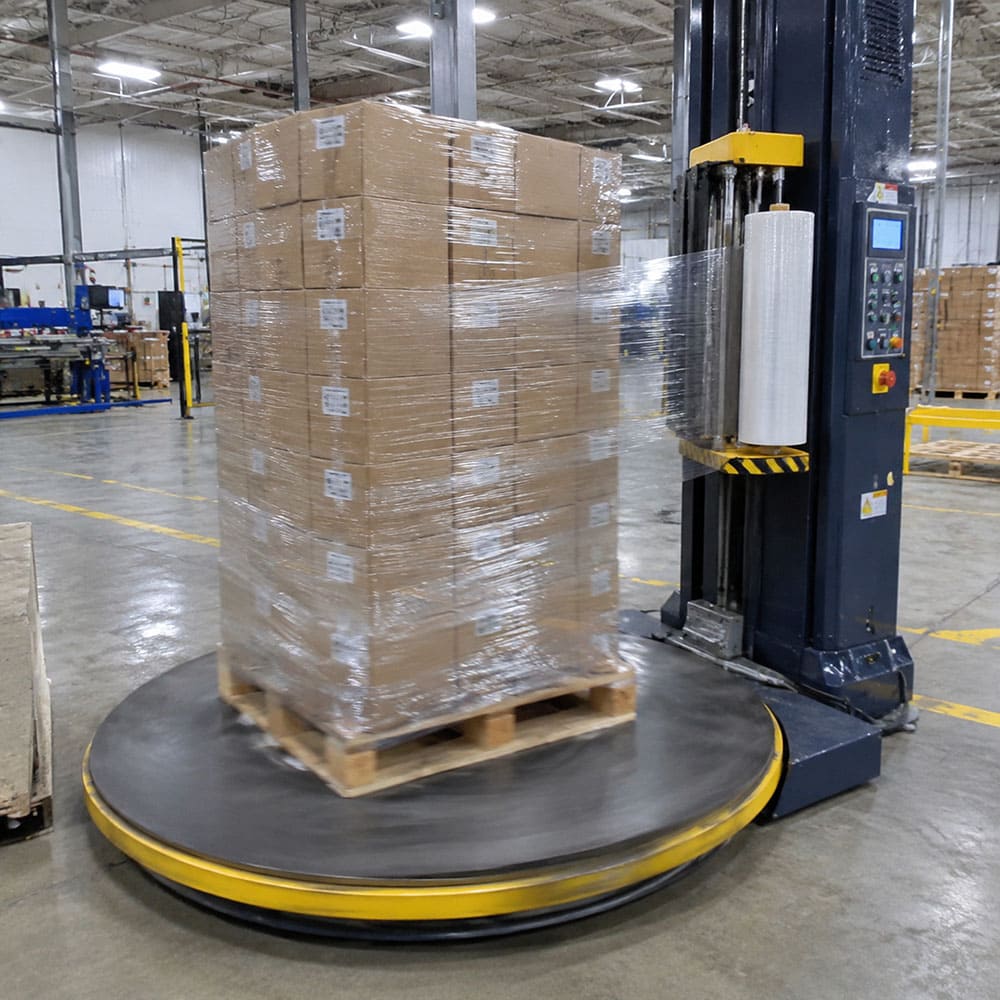
How should loaded trials expose operational issues?
Testing a machine without a load misrepresents its field performance.3 Real-world operation reveals reliability across cycles. This prevents intermittent alarms or inconsistent behavior from going undetected.
Always test with a simulated or actual load: Place the defined pallet into the wrapping cycle, following the desired pattern and count rules.
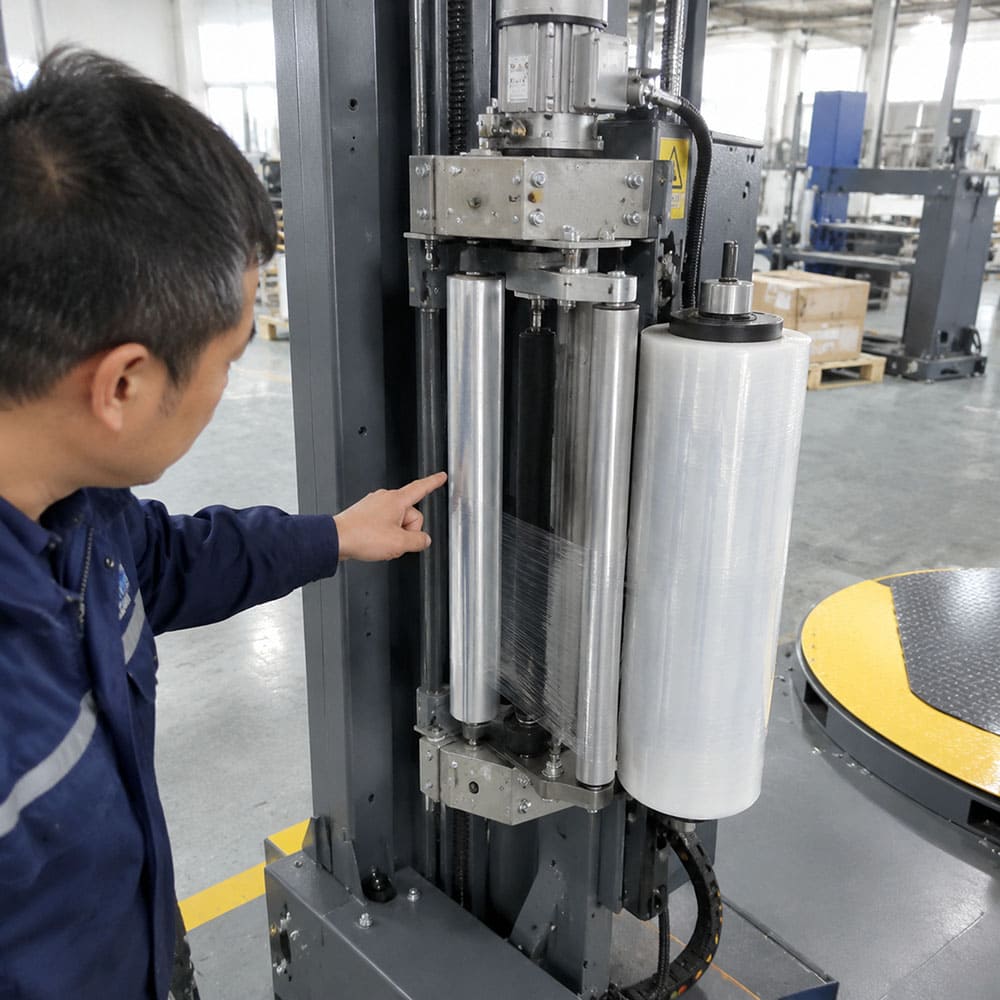
Detailed loaded trials help uncover:
- Inconsistent stretch film application
- Film snapping or improper tension on unstable pallets
- Erratic rotation speed or wrapping arm movements
- Cycle interruptions caused by software or hardware glitches
Pro tip: Run at least five wrapping cycles in succession while monitoring film quality, machine sound, wrapping tension consistency, and smooth operation.4 Log interruptions or irregularities. Don’t accept entry-level observations—ask for quantitative output like cycle duration, film coverage per pass, and footage recordings.
How do you verify pallet wrapper safety functions?
Safety testing is often skipped or oversimplified during FAT—leading to operational risks post-installation.5 Each safety mechanism must be triggered against clear criteria and results recorded.
Key safety functions to test include:
- Emergency-stop button: Confirm immediate machine halt after manual activation.6 Record observations about what triggered the stop and whether recovery was safe.
- Anti-clamping stop: Verify this mechanism prevents hazardous clamping or injury risks under simulated conditions.
- Overload protection: Test system behavior when load weight exceeds preset limits.7
Every safety mechanism requires:
- A trigger condition: Manual button push, simulated unsafe clamping, or intentional overload.
- Observations during activation: Did the machine respond as expected? How was it stopped safely?
- Post-results reset: Confirm the system resumed normal operation reliably and did not remain locked out unnecessarily.
Case Example: A U.S. Customer Experience
In one recorded example, our American client insisted on remote validation of both emergency-stop features before proceeding to shipment. FAT items included video documentation of stop triggers, recovery procedures, and the edited safety operating manual. The customer subsequently approved shipment confidently and reported fault-free operation.
While this doesn’t guarantee full compliance with every regional standard, it underscores the importance of transparent, auditable FAT results for international buyers.
How can remote FATs be made auditable?
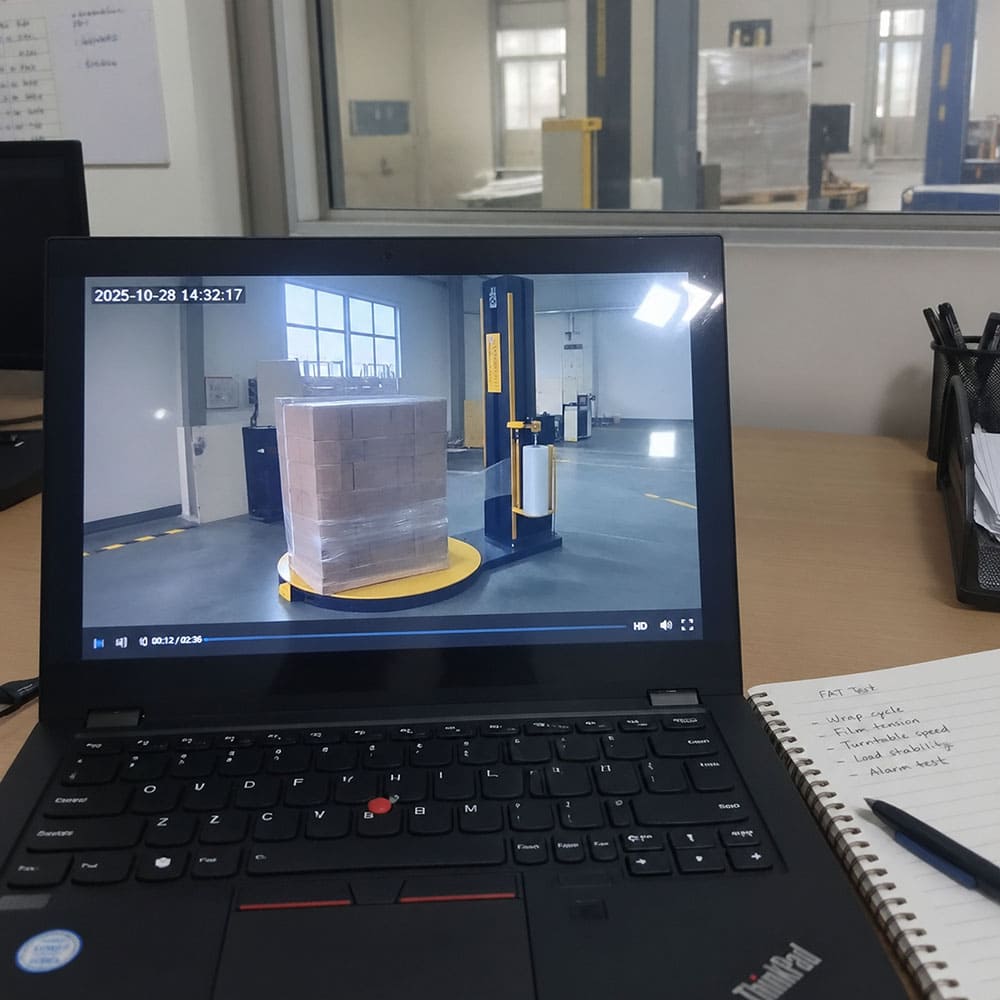
Accepting only brief, edited video clips can hide critical omissions. Buyers should request complete, traceable evidence for inspections done remotely.
To audit a remote FAT:
- Confirm video continuity: Are testing conditions uninterrupted, with no unexplained jumps?
- Ask for supporting documentation: Request the safety operating manual aligned with your tested machine model.8
- Log raw-cycle timing and outputs: Verify data consistency against real-world task demands.
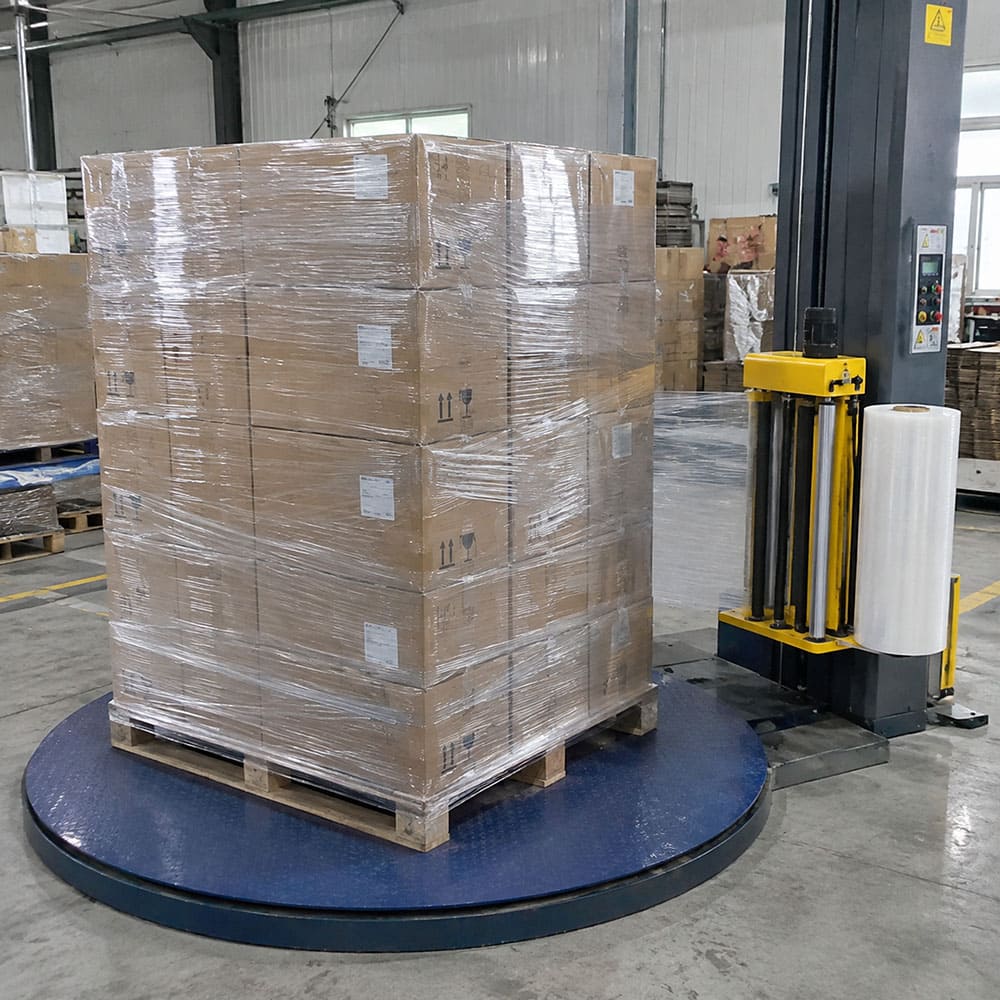
This approach reduces risks of shipment approval based on incomplete or inaccurate data.
Frequently Asked Questions
Why do I need to define pallet specifications before testing?
Without defined pallet specs, the wrapping machine may be tested under conditions that don’t align with your intended use, increasing the likelihood of failure or compatibility issues after arrival.
How long should a FAT take for a pallet wrapping machine?
Cycle testing typically lasts 2–5 hours depending on the repeated load count, while safety function checks can add 1–2 hours.9 Plan for additional time to review results and documentation.
Can a FAT confirm regulatory compliance?
A FAT ensures performance and basic safety validation, but it is not equal to independent laboratory certification for regulatory compliance. Buyers should independently verify compliance with local standards.
What should I look for in a FAT video?
Check for unbroken clips, clear documentation of test conditions, and detailed views of load handling, wrapping quality, and the machine’s response to safety triggers.
How can I simulate loads for FATs?
If real pallets are unavailable, use documented equivalents such as identical-sized weight blocks or dummy stacks to replicate the defined load dimensions and stability.
Conclusion
Testing your pallet wrapping machine before shipment through a well-structured Factory Acceptance Test eliminates operational and safety risks while boosting buyer confidence. By verifying performance with loaded trials and clearly documented safety functions, you ensure equipment is suited to your unique requirements.
Define pre-FAT testing conditions, observe repeated cycles, and make remote inspections auditable. For international buyers, thorough FAT procedures are crucial to trouble-free installation and reliable operation.
Ready to discuss how Myway Machinery ensures confident equipment delivery? Contact us today to explore our FAT process and solutions.
"Machine Safety in the Workplace", https://www.cdc.gov/niosh/machine-safety/about/index.html. Studies in industrial safety have documented cases where untested machinery led to operational disruptions and safety hazards. Evidence role: case_reference; source type: research. Supports: The risks associated with shipping unchecked equipment, including operational and safety failures.. Scope note: Specific examples may vary by industry and equipment type. ↩
"Effects of intermittent exercise and use of home ... - PubMed", https://pubmed.ncbi.nlm.nih.gov/10546695/. Research on equipment testing highlights FAT as a method to uncover intermittent operational issues that might not appear during routine checks. Evidence role: mechanism; source type: research. Supports: The role of FAT in identifying intermittent equipment issues.. Scope note: The effectiveness of FAT may depend on the thoroughness of the testing protocol. ↩
"24.3 Equipment & Facility Performance Testing", https://projectdeliverymanual.engineering.lacity.gov/chapter-24-facility-startup/243-equipment-facility-performance-testing. Engineering best practices emphasize load-based testing as essential for simulating real-world conditions during FAT. Evidence role: expert_consensus; source type: education. Supports: The necessity of load-based testing to accurately evaluate machinery performance.. ↩
"The effects of repeated cycles of weight loss and regain in rats", https://pubmed.ncbi.nlm.nih.gov/3823159/. Industry standards often recommend repeated cycle testing to ensure consistent performance and identify potential faults. Evidence role: general_support; source type: institution. Supports: The importance of running multiple cycles during FAT to identify operational issues.. Scope note: Specific cycle counts may vary depending on the equipment type and testing protocol. ↩
"GMPs 2004 Study: Common Food Safety Problems", https://www.fda.gov/food/current-good-manufacturing-practices-cgmps-food-and-dietary-supplements/good-manufacturing-practices-21st-century-food-processing-2004-study-section-4-common-food-safety. Case studies in industrial safety have shown that inadequate FAT safety testing can result in post-installation hazards. Evidence role: case_reference; source type: research. Supports: The risks of skipping or oversimplifying safety testing during FAT.. Scope note: Specific risks may depend on the type of machinery and safety protocols in place. ↩
"Presence of push labels on emergency stop button ...", http://www.osha.gov/laws-regs/standardinterpretations/1996-09-10. Safety regulations, such as those outlined by OSHA, specify that emergency-stop buttons must immediately halt machinery to prevent hazards. Evidence role: definition; source type: government. Supports: The expected behavior of emergency-stop buttons in industrial machinery.. ↩
"Fat overload syndrome in pediatric patients: One case and ten ...", https://pmc.ncbi.nlm.nih.gov/articles/PMC12823247/. Engineering guidelines recommend testing overload protection systems to ensure they respond correctly to excessive load conditions. Evidence role: mechanism; source type: institution. Supports: The expected response of overload protection systems during FAT.. Scope note: Specific responses may vary depending on the machinery design and load parameters. ↩
"Kitchen Companion: Your Safe Food Handbook", https://www.fsis.usda.gov/sites/default/files/media_file/2020-12/Kitchen-Companion.pdf. Educational resources on equipment testing emphasize the inclusion of safety manuals to ensure alignment with tested models. Evidence role: general_support; source type: education. Supports: The importance of including safety manuals in FAT audits.. ↩
"Optimal Diet Strategies for Weight Loss and ... - PMC - NIH", https://pmc.ncbi.nlm.nih.gov/articles/PMC8017325/. Industry guidelines suggest that FAT durations vary based on equipment complexity, with cycle testing and safety checks often requiring several hours. Evidence role: statistic; source type: institution. Supports: The typical duration of FAT cycle testing and safety checks.. Scope note: Exact durations may depend on the specific machinery and testing protocols. ↩