Skip to content


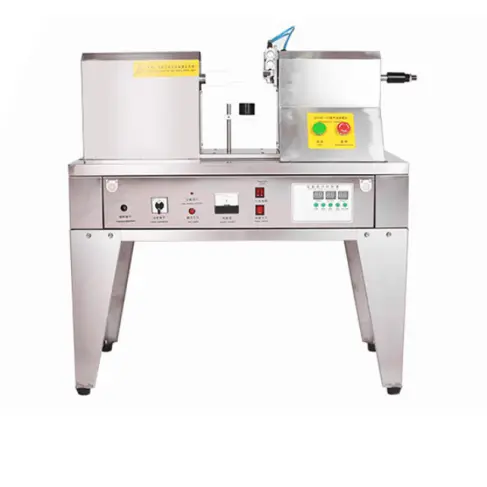
Sealing plastic tubes for products like toothpaste, cosmetic creams, or food industrial supplies comes with a stricter standard than most packaging tasks. The seal needs to be leak-proof, sanitary, and cosmetically clean, since any visible defect at the tube end is immediately noticeable to the end consumer holding the product in their hand.
This is why ultrasonic tube sealing has become the standard approach across toothpaste, cosmetic, and food industrial packaging. Understanding what actually makes a sealing machine reliable for this kind of finished-product application helps clarify what to look for before choosing one.
1. Why Tube Sealing Has a Higher Bar Than Other Packaging
Unlike a shipping carton hidden inside a box, a sealed tube end is often part of the finished retail product — the seam sits right at the bottom of the tube, visible every time the product is picked up. Any wrinkling, discoloration, or weak seal at this point isn't just a functional issue; it directly affects how premium or trustworthy the product looks on the shelf.
This makes seal quality, sanitation, and consistency non-negotiable for toothpaste, cosmetic, and food industrial supply manufacturers, where product perception is closely tied to packaging finish.
2. What to Confirm Before Choosing a Tube Sealing Machine
Tube sealers are built around a specific tube diameter and height range, so it's worth clarifying these details before comparing machines:
- What is your tube diameter and height range?
- How many tubes need to be sealed per minute?
- What tube material are you using — plastic, laminate, or metal?
- Does your process need vertical or horizontal worktable orientation?
- What compressed air supply is available at your facility?
Clarifying these points first makes it easier to confirm whether a machine's sealing diameter range and capacity will genuinely match your tube specifications and production speed.
3. Adjustable Worktable Orientation Adds Line Flexibility
Not every production line is laid out the same way, and a sealing machine that only works in one fixed orientation can force awkward workflow compromises. A worktable that adjusts between vertical and horizontal positions gives manufacturers the flexibility to integrate the sealer into an existing line layout, rather than redesigning the line around the machine.
This is particularly useful for facilities running multiple product lines with different tube handling requirements on the same floor.
4. Stainless Steel and Aluminum Alloy Construction Supports Sanitary Standards
For toothpaste, cosmetic, and food-related packaging, the machine's build material matters almost as much as its sealing performance. A horizontal aluminum alloy structure paired with a stainless steel package supports easier cleaning and better resistance to the moisture and residue that come with continuous product filling and sealing cycles.
This construction approach also supports environmental and sanitation standards that food and cosmetic manufacturers are typically required to maintain across their packaging equipment.
5. Sealing Capacity Needs to Match Downstream Filling Speed
On a tube packaging line, sealing typically happens right after filling, so the sealer's capacity needs to keep pace with the filling stage rather than becoming the new bottleneck. A sealing machine rated for a wide range of pieces per minute gives production planners room to scale output without the sealing step falling behind.
6. Introducing This Ultrasonic Tube Sealing Machine
Built specifically for toothpaste, cosmetics, and food industrial supply packaging, this ultrasonic tube sealing machine features a horizontal aluminum alloy structure with a stainless steel package, supporting the sanitary and cleaning standards these industries require. Its independent platform includes a vertical and horizontal adjustable worktable, allowing it to fit into different line layouts while maintaining stable, high-efficiency operation.
The machine handles a sealing diameter of 10–50 mm and tube heights of 50–220 mm, with a sealing capacity of 15–45 pieces per minute. It runs on 1.2 kW of power at a compressed air pressure of 0.6 MPa, and its semi-automatic operation is straightforward enough for operators to run with minimal training.
Running on 110/220V, 50Hz power, the machine measures 1100 × 460 × 450 mm and weighs 80 kg. It's built for plastic and metal tube packaging across food, beverage, commodity, and apparel-related applications where seal quality directly affects finished product presentation.
7. Key Specifications
| Specification | Details |
|---|---|
| Product Name | Tube Sealing Machine |
| Sealing Type | Ultrasonic power |
| Automatic Grade | Semi-Automatic |
| Sealing Diameter | 10–50 mm |
| Tube Height | 50–220 mm |
| Capacity | 15–45 pcs/min |
| Power | 1.2 kW |
| Air Pressure | 0.6 MPa |
| Dimension | 1100 × 460 × 450 mm |
| Net Weight | 80 kg |
8. Is This the Right Fit for Your Tube Packaging Line?
If your current sealing process leaves visible seams, inconsistent seals, or doesn't meet sanitation standards required for toothpaste, cosmetic, or food tube packaging, this machine is built to address exactly that gap. Its adjustable worktable, sanitary construction, and wide sealing capacity range make it adaptable across different tube formats and line layouts, and it's backed by video technical support and online support for setup and ongoing operation.
Get a Quote or Request a Test Run
Send us your tube diameter, height, and required sealing speed, and we'll confirm whether this machine fits your production line. We can also arrange a demo video or share the full machinery test report before you order.
Myway Machinery
Brand: Myway
Email: sales@syplastech.com