Skip to content


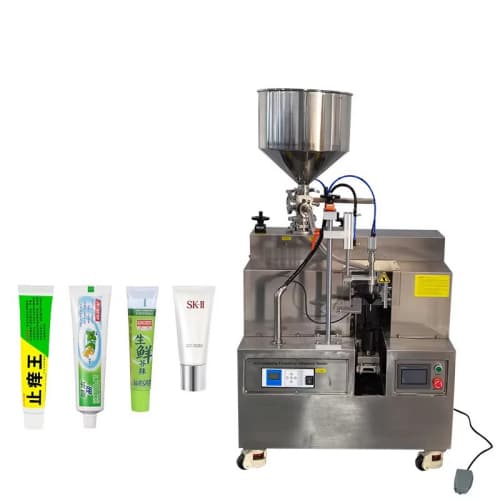
Filling and sealing tubes — for creams, pastes, gels, or liquid products — comes with a specific set of challenges that flat pouches or bottles don't face. The tube needs to hold its shape, seal tightly enough to prevent leakage, and do so without damaging heat-sensitive formulations or the tube material itself. Traditional welding or bonding methods can work, but they often introduce heat stress, higher operating costs, or inconsistent seal quality over time.
This is why ultrasonic tube filling and sealing machines have become the preferred choice across cosmetic, food, and chemical packaging. Understanding how ultrasonic sealing actually works — and what to check before choosing a machine — makes it easier to judge whether it fits your production line.
1. Why Traditional Sealing Methods Fall Short for Tubes
Heat welding and adhesive bonding have long been used to seal tube ends, but both come with trade-offs. Heat welding requires direct thermal contact with the tube material, which risks warping the workpiece or affecting heat-sensitive contents inside. Adhesive bonding, meanwhile, adds a recurring material cost and can leave residue or inconsistent bond strength depending on application accuracy.
For products like creams, cosmetics, or liquid soap — where packaging appearance and seal integrity both matter to the end customer — these inconsistencies can show up as visible defects or, worse, product leakage during shipping and shelf storage.
2. What to Confirm Before Choosing a Tube Filling and Sealing Machine
Tube filling equipment is built around specific tube dimensions and fill volumes, so it's worth clarifying these details before comparing machines:
- What is your tube length and diameter range?
- What fill volume does your product require per tube?
- How many tubes need to be filled and sealed per minute?
- Is your product heat-sensitive or prone to foaming during filling?
- What tube material are you using, and is it compatible with ultrasonic sealing?
Clarifying these points first makes it easier to confirm whether a machine's filling range and sealing capability will genuinely match your product and packaging format.
3. How Ultrasonic Sealing Actually Works
Ultrasonic sealing uses high-frequency vibration to generate localized heat at the point of contact, fusing the tube material together without direct external heating of the whole tube. This makes it a low-cost, clean, and pollution-free alternative to traditional welding or bonding, since there's no adhesive residue and minimal thermal stress placed on the tube or its contents.
Because the process relies on vibration frequency rather than sustained heat, it also tends to be gentler on the tube material itself, reducing the risk of visible deformation at the seal point.
4. Automatic Frequency Tracking Protects the Ultrasonic Mold
A key detail that separates reliable ultrasonic sealers from lower-quality equipment is how the system manages vibration frequency over time. An intelligent, automatic frequency-tracking electric box identifies and adjusts to the ultrasonic system's actual vibration frequency without requiring manual recalibration, which helps protect the mold from excess wear and keeps sealing performance stable across long production runs.
This also tends to result in lower operating noise and a longer service life for the ultrasonic components, since the system isn't running at a mismatched or drifting frequency during continuous operation.
5. Filling Accuracy Matters as Much as Sealing Quality
A tube that seals perfectly but is under- or over-filled still creates a quality control problem. Consistent filling accuracy across a wide volume range allows the same machine to handle both small-volume cosmetic tubes and larger food or liquid soap tubes without recalibrating for every batch change.
This matters particularly for manufacturers running multiple SKUs through the same line, where fill volume can vary significantly between product formulations.
6. Introducing This Ultrasonic Tube Filling and Sealing Machine
Built around ultrasonic sealing technology, this automatic tube filling and sealing machine replaces traditional welding or bonding entirely, offering a low-cost, clean, and pollution-free process that doesn't damage the tube or its contents. Its intelligent automatic frequency-tracking electric box identifies the ultrasonic system's vibration frequency without manual adjustment, protecting the mold while keeping noise low and extending service life.
The machine handles tube lengths from 50–250 mm and diameters from 10–50 mm, with a filling range of 10–250 ml — covering a wide span of cosmetic, food, and liquid product formats on the same equipment. Operating at a speed of 8–12 pieces per minute, it runs on a 2.6 kW ultrasonic power system at 20 kHz frequency, with a filling accuracy of 0.1 for consistent dosing across every tube.
It's compatible with filling materials including beer, cream, pure water, air, milk, liquid soap, water, juice, soda, honey, and paste, and works across tube and bottle packaging types. Running on 220V or 380V power, the machine measures 1000 × 780 × 1250 mm and weighs 180 kg, with straightforward operation and maintenance built into its design.
7. Key Specifications
| Specification | Details |
|---|---|
| Sealing Type | Ultrasonic power |
| Automatic Grade | Automatic |
| Tube Length | 50–250 mm |
| Tube Diameter | 10–50 mm |
| Filling Range | 10–250 ml |
| Filling Accuracy | 0.1 |
| Speed | 8–12 pcs/min |
| Frequency | 20 kHz |
| Power | 2.6 kW |
| Machine Size | 1000 × 780 × 1250 mm |
8. Is This the Right Fit for Your Product Line?
If your current sealing method involves heat welding or adhesive bonding and you're dealing with inconsistent seals, mold wear, or product damage from excess heat, this ultrasonic machine addresses each of those issues directly. Its wide tube size and fill volume range make it adaptable across cosmetic, food, and chemical product lines, and it's backed by video technical support and online support for setup and ongoing operation.
Get a Quote or Request a Test Run
Send us your tube dimensions, fill volume, and product type, and we'll confirm whether this machine fits your production line. We can also arrange a demo video or share the full machinery test report before you order.
Myway Machinery
Brand: Myway
Email: sales@syplastech.com