Skip to content


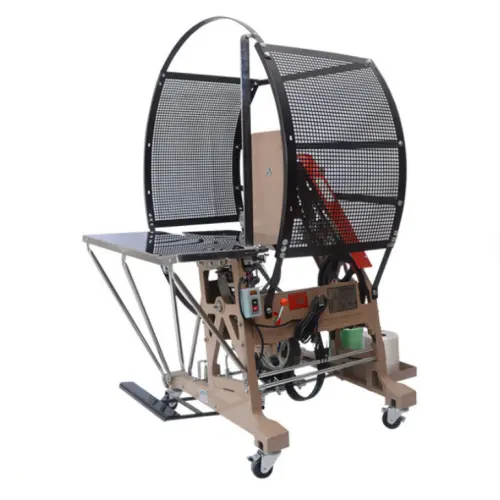
Bundling boxes, cases, or grouped items with rope or strapping is a step many packing lines still do by hand — pulling the strap tight, tying it off, and trimming the ends for every single unit. It works, but it's slow, inconsistent from one operator to the next, and becomes a real drag on throughput once daily volume increases.
Automatic PE rope tying machines were built to solve exactly this problem — applying, tightening, and sealing the strap in one continuous motion. Before choosing one, it helps to understand what actually determines whether a strapping machine will perform reliably on your specific product range.
1. Why Manual Strapping Falls Behind on Busy Lines
Manual strapping depends heavily on operator technique. Strap tension varies from person to person, and tying strength is never fully consistent — some bundles end up too loose to hold securely during transit, while others are tied so tight they risk damaging the packaging underneath.
This inconsistency becomes a bigger problem during high-volume periods, when packing stations need to move faster without sacrificing bundle integrity. Repetitive strapping is also physically demanding work, and fatigue over a long shift tends to make tension control even less predictable toward the end of the day.
2. What to Confirm Before Choosing a Strapping Machine
PE rope tying machines are built around a defined packing size range, so it's worth clarifying a few details before comparing models:
- What are your smallest and largest package dimensions?
- What is the typical weight range of each bundle?
- How many units need to be strapped per minute?
- What type of strapping material are you currently using?
- Does the process need automatic detection and feeding, or manual placement?
Clarifying these points first makes it much easier to judge whether a machine's packing size range and speed will genuinely match your production reality, rather than just comparing numbers on paper.
3. Packing Size Range Defines What the Machine Can Actually Handle
A common mistake when evaluating strapping equipment is assuming a machine will cover any package size without checking its actual working range. If your products vary from small boxes to larger cases, the machine's maximum and minimum packing size — along with baffle depth — needs to comfortably accommodate that full range, not just an average size.
Baffle depth in particular affects how well the machine positions and holds the item during the tying cycle, which directly influences strap placement consistency across different product shapes.
4. Automatic Detection Reduces Operator Dependency
One of the most useful upgrades over manual strapping is automatic detection — the machine senses when an item is placed and begins the tying cycle without requiring a manual trigger. This shortens the training curve for new operators significantly, since consistent output no longer depends on developing manual tying skill over time.
Combined with automatic transportation of the strapped item afterward, this creates a smoother packing rhythm where operators mainly load and unload rather than manage every step of the tying process by hand.
5. Melt-and-Seal Strapping Creates a More Reliable Bond
Knotted or manually tied straps can loosen during handling, especially over longer transit routes. A machine that tightens the strap and then melts and fuses the two ends together creates a stronger, more permanent bond than a manual knot — reducing the risk of straps loosening or slipping before the shipment reaches its destination.
This sealing method also produces a cleaner finish than manual tying, with no loose strap ends that could snag during storage or handling.
6. Introducing the PE Rope Bundling Machine
Built around this exact process, this PE rope tying machine places the item on the machine bed, where an induction device automatically ties the strapping tape tightly around the surface, then melts and fuses the two strap ends together before trimming — completing the entire bundling cycle without manual knotting.
The machine handles a packing size range from 30 × 90 mm up to 450 × 450 mm, with a baffle depth of 230 mm, covering a wide range of case and carton formats on the same line. Operating at a packing speed of 35 times per minute, it's built for PLC-controlled, automatic detection and automatic transportation — meaning the tying cycle starts as soon as an item is placed, with minimal manual input required.