Skip to content


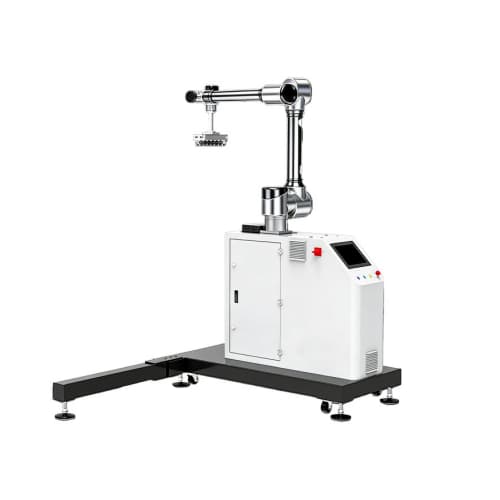
Palletizing is often one of the most repetitive jobs at the end of a production line. Workers may need to repeatedly pick cartons or products, arrange them into a stable pattern and place them onto pallets. When production volume increases, this manual process can become physically demanding and difficult to maintain at the same pace throughout the shift.
A cobot palletizer provides an alternative approach by using robotic movement for repetitive material handling and palletizing tasks. For factories looking for flexible automation without a large conventional robotic cell, collaborative palletizing can be worth considering.
1. Why Are More Factories Automating Palletizing?
Palletizing involves repetitive lifting, positioning and stacking. For factories handling a steady flow of cartons, bags or packaged products, these movements can consume a significant amount of labor time.
- Repeated picking and placing operations
- Manual stacking requires consistent attention
- Different operators may create different pallet patterns
- Labor requirements increase with production volume
- Changing products can make fixed automation less flexible
2. What Makes a Cobot Palletizer Different?
A collaborative palletizing system is designed around robotic handling while focusing on interaction between the robot and the surrounding working environment. Compared with a large traditional robotic installation, a cobot-based solution can be considered when flexibility and space utilization are important factors.
The supplied product information highlights torque sensors, obstacle detection and automatic movement stopping as part of the system's safety and collaborative design.
3. Why Is Palletizing Accuracy Important?
A pallet is more than a collection of products. The arrangement of each layer affects how the finished load is handled, stored and transported. Poor positioning can create an unstable stack or make better use of the available pallet area difficult.
A programmable palletizing system can follow predefined placement patterns, helping maintain a more repeatable stacking process than fully manual handling.
4. Can One Palletizer Handle Different Products?
Product variation is an important consideration for B2B buyers. A factory may need to palletize different carton sizes, weights or product types rather than running only one standardized SKU.
The supplied specifications describe compatibility with grippers, sensors, conveyors, vision systems, end effectors and multi-purpose robots. A quick-change end-effector concept can also help adapt the robot to different handling requirements.
5. How Does Load Capacity Affect Cobot Selection?
The payload requirement should include not only the product but also the gripper or end effector. Underestimating this combined weight can lead to an unsuitable configuration.
This model has a listed load capacity of 30 kg, including the gripper. Buyers should therefore calculate the actual product weight together with the selected end effector when evaluating suitability.
6. What Palletizing Speed Can Buyers Expect?
Speed should always be evaluated together with product weight, gripping method, pallet pattern and the distance the robot needs to travel. A higher cycle rate does not automatically mean higher overall line output if the upstream process cannot supply products at the same rate.
The supplied specification lists a palletizing speed of 8–10 cycles per minute, depending on the product.
7. What Pallet Height Can the Robot Handle?
Pallet height is another important specification when planning a robotic palletizing station. The required height depends on carton dimensions, the number of layers and the available installation space.
This model has a listed maximum palletizing height of 2000 mm, with a lifting column stroke of 600 mm. The specified pallet size is approximately 1200 × 1200 × 150 mm.
8. Key Specifications of This Cobot Palletizer
| Specification | Details |
|---|---|
| Model | SY1030D-1800 |
| Application | Material Handling, Palletizing |
| Palletizing Speed | 8–10 cycles/min |
| Load Capacity | 30 kg including gripper |
| Maximum Palletizing Height | 2000 mm |
| Pallet Size | 1200 × 1200 × 150 mm |
| Power | 3 kW |
| Power Supply | 220 V / 50 Hz |
| Air Pressure | 0.5–0.7 MPa |
9. Why Is Flexible End-Effector Selection Important?
The gripper is the part that directly interacts with the product. Cartons, bags and other packaged goods may require different gripping methods, so the end effector should be selected according to the actual product.
The supplied product information supports different end-effectors and describes a quick-change design for adapting to different gripping or suction tools. This can be useful for factories handling multiple product types.
10. Why Consider the Myway Cobot Palletizer?
For manufacturers looking to automate repetitive palletizing and material handling, the Myway cobot palletizer provides a flexible robotic solution. The SY1030D-1800 model is designed for palletizing applications and supports different end-effectors according to the product being handled.
The key specifications include a 30 kg load capacity including the gripper, 8–10 cycles per minute palletizing speed and a maximum palletizing height of 2000 mm. Its control and robotic system can be considered for factories where repetitive pallet stacking is becoming a production bottleneck.
Before selecting the final configuration, buyers should provide product dimensions, product weight, pallet size, desired stacking pattern and product photos. These details are important for confirming the suitable gripper and palletizing program.
Conclusion
For factories dealing with repetitive palletizing work, robotic automation can provide a more consistent approach to product handling and stacking. The most suitable solution depends on product weight, pallet dimensions, stacking pattern, cycle requirements and available factory space.
If you are considering a cobot palletizer for your production line, send us your product information and palletizing requirements. Myway Machinery can help check the suitable configuration and provide a machine video for evaluation.
Myway Machinery
Brand: Myway
Email: sales@syplastech.com